
Payday Loan Rates & Fees in Canada: What You’re Really Paying
Payday loans can be fast — but the most important part is understanding the total repayment amount and the due date. This guide explains how fees typically work in Canada, what borrowers should check before accepting an offer, and how to reduce the risk of repayment stress.
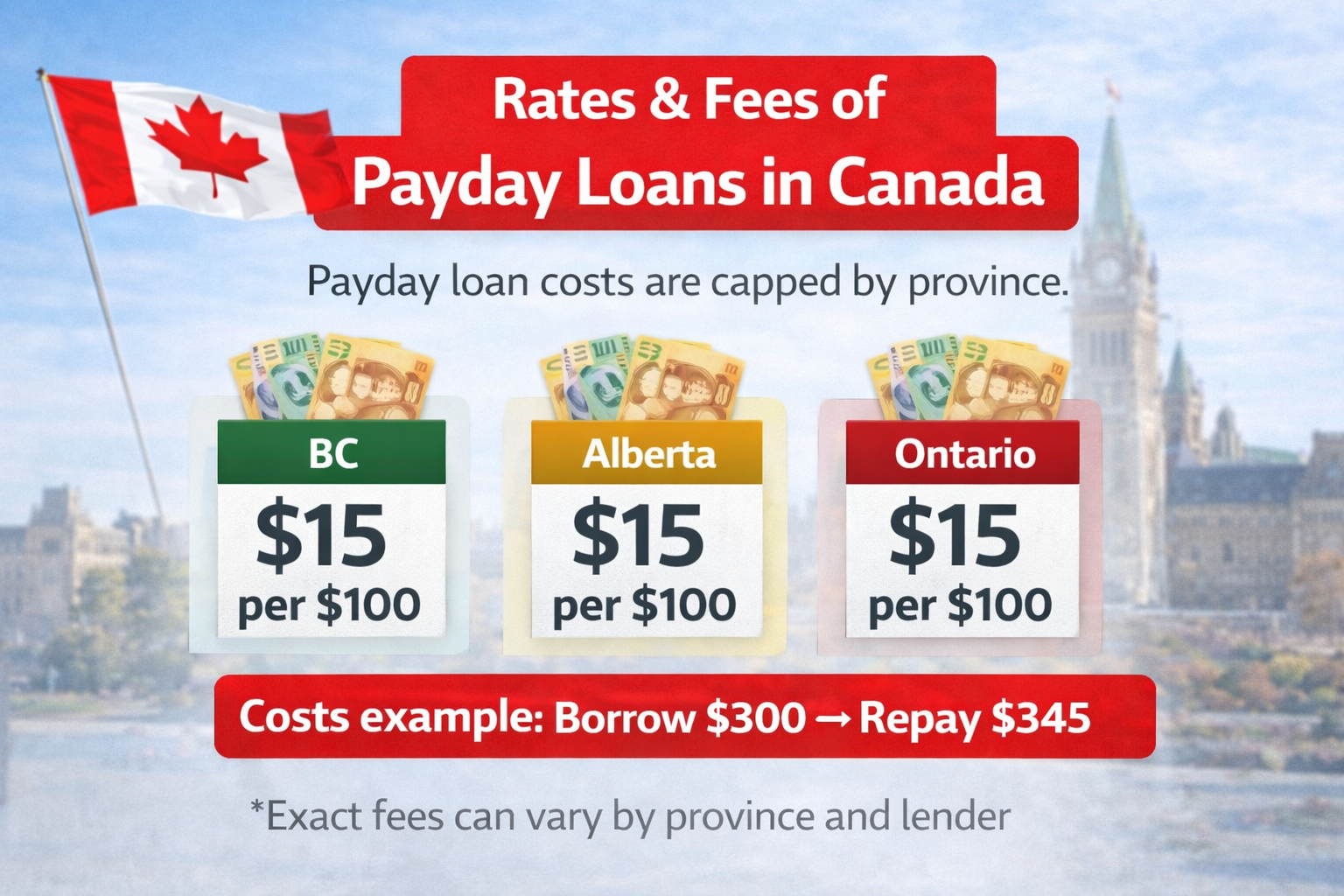
Best practice: compare total repayment and the due date, not just the loan amount.
Why payday loan “rates” can be confusing
Many borrowers search for “payday loan interest rates,” but payday loans are often fee-based. That means you may see a fixed fee per borrowed amount instead of a long-term annual interest rate. The most useful metric is not a headline number — it’s the total repayment amount and the date it’s due.
Because payday loans are short-term, even a seemingly “small” fee can feel expensive relative to the time period. That’s why borrower-first guidance focuses on total cost, repayment timing, and whether repayment is realistic.
What borrowers should check in every offer
Before you accept a payday loan, confirm the following in writing (either in the agreement or clearly disclosed terms):
- Total repayment amount: loan amount + fees
- Repayment date: exact day the full amount is due
- Payment method: how repayment will be taken (e.g., pre-authorized debit)
- Late payment consequences: what happens if funds aren’t available
- Optional services: anything added that increases cost
If you want the process overview, visit: How Payday Loans Work →
Total repayment: the number that matters most
Total repayment is the full amount you must repay — including fees — by the due date. This is the number that impacts your real budget. Borrowers should write it down and compare it to their next payday income.
Helpful content means giving you a practical tool, so here’s a quick test:
✅ The “Next Payday Budget Test”
- List your essential expenses due before payday (rent, food, utilities, childcare).
- Subtract them from your expected payday income.
- If the total repayment amount doesn’t fit comfortably, consider alternatives first.
Examples: how fees can change the real cost
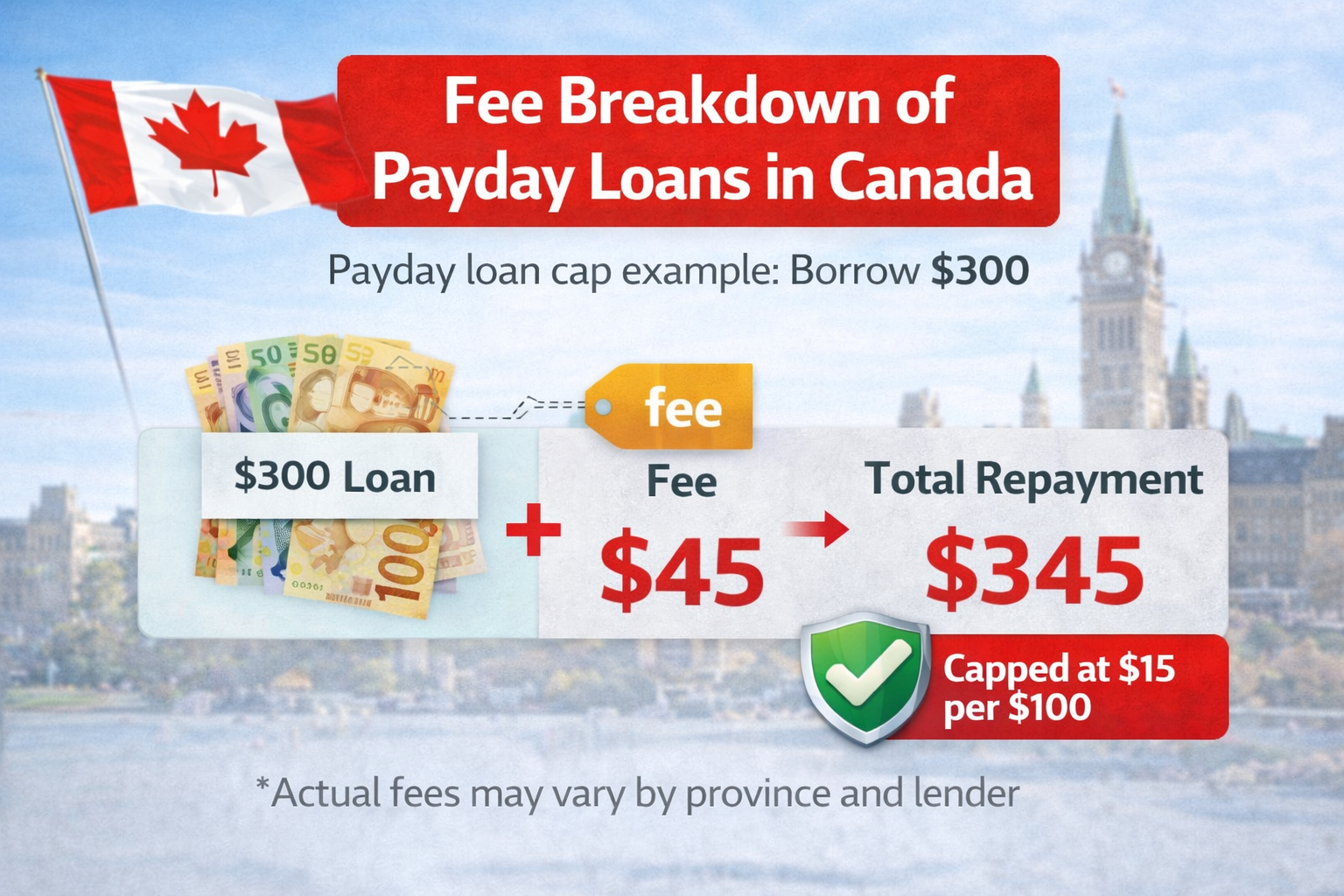
Payday loan fees are usually disclosed as a fee per borrowed amount. That means the total repayment amount may be higher than the amount you receive. Even if the fee seems manageable, the short repayment window matters.
The real question isn’t only “how much is the fee?” It’s: “Can I repay the full amount on time without borrowing again?” If repayment causes you to fall behind on essentials, the loan may create more stress than it solves.
Province differences: why the same loan can look different
Payday loan rules and fee caps can vary by province. That means the maximum fees and required disclosures may be different depending on where you live. For the most accurate guidance:
Use our province hub to get location-specific information: Payday Loans by Province →
How to reduce risk and avoid repeat borrowing
Payday loans are designed to be short-term. Borrowers can reduce risk by:
- Borrowing only what’s necessary
- Setting a repayment reminder before the due date
- Ensuring sufficient funds to avoid NSF fees
- Reviewing alternatives if repayment would disrupt essentials
- Reading all disclosures and keeping a copy of the agreement
If you’re unsure about repayment, alternatives may be safer: Alternatives to Payday Loans →